
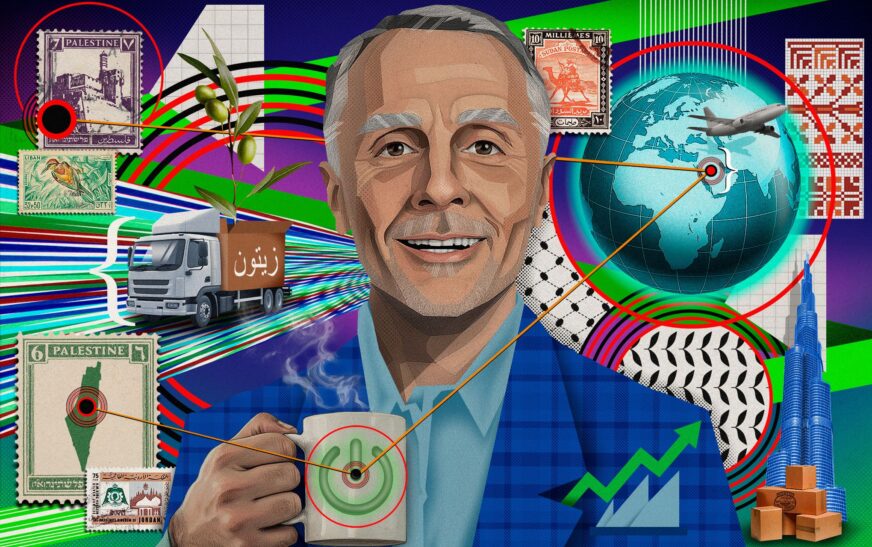
In January this year, when asked what occupies his mind, Fadi Ghandour didn’t separate business from politics, or technology from society. He rejected the premise altogether.
“I don’t think I can separate myself from work, and so I look at my whole existence as one,” he says. “Everything that happens in the world occupies me.”
The UAE-based Jordanian entrepreneur is best known as the cofounder of Aramex, the logistics company he helped build from a regional startup into an international business. In 1997, it became the first Arab company from the Middle East to list on the NASDAQ Composite.
In the decades since, he has become a prominent startup investor in the region, founding Wamda and backing more than 100 companies across the Middle East.
Today, Fadi Ghandour operates less as a founder and more as an ecosystem builder, investing in startups, advising founders and engaging in conversations that sit at the intersection of technology, capital and society.
He doesn’t keep those views private. Ghandour has been outspoken on regional issues, using platforms like LinkedIn to comment on conflicts shaping the region – from Israel’s war on Gaza to its ongoing aggressive military attacks in Lebanon – often framing them not just as political crises, but as questions of responsibility and power.
The Private Sector, Redefined
For Ghandour, the role of entrepreneurs isn’t theoretical – it’s personal, shaped as much by geography as by business.
“I look at Lebanon, I look at Jordan, I look at Syria. I look at Palestine specifically. I’m very concerned,” he says. “But I don’t look at it from a negative perspective. I look at it from concern and what can be done for us as citizens, as people of influence.”
That framing runs through how he sees the private sector – not as a parallel to government, but as something that has to step in where it can.
“I’ve been preaching this role for the private sector, for entrepreneurs in development, in our societies as an essential strategic thing,” he says. “We cannot have our own happiness when we live in societies that are not well.”
It’s a position he has acted on for years through Wamda, which has backed more than 100 startups across the region, including companies such as Careem and Tabby – the buy-now-pay-later platform reported to be preparing for an IPO in Saudi Arabia.
But he stops short of grand claims about solving entire systems. His version of responsibility is narrower – and more practical: “I am not one that preaches that you want to solve the problems of the world,” he says. “But within my capabilities… I believe that I need to use those for the benefit of the areas that we live in.”
The expectation, in his view, isn’t that founders replace institutions, but that they act – using capital, networks and access – when those tools can make a difference.